
Probably ten years ago some friends of mine from the local university told me about E-Sword. Since then, I have been using this free study software that minimally comes with King James Version, and Strong's Greek and Hebrew definitions. But more than that, one can add on all sorts of modules to enhance E-Sword. I have downloaded commentaries like Barnes, Clarke, Gill; additional versions like ASV, NASB (this cost $20 to activate), ESV, GNB, the Message, the Septuagint, the Bible in Spanish, YLT, etc. I have added Thayer's Lexicon, an in-depth Hebrew Lexicon, Webster's 1828 dictionary, different Bible encyclopedias, a cross-referencing module called Treasury of Scripture Knowledge. Additionally, I have added volumes like The Ante-Nicene Fathers, Schaff's History of the Church, Foxe's Book of Martyrs, Finney's Systematic Theology, Eddersheim's Life and Times of Jesus the Messiah, and works from Josephus. Finally, there are different map modules you can add on as well.
Also, you can create your own study notes, do exhaustive and comprehensive word/phrase searches, and even search by Strong's numbers.
Let me know if you've tried this software, and if it is a help to you.
About Me
Monday, October 27, 2008
Excellent Free Bible Software


Saturday, October 25, 2008
Paying too Much for an Office Suite?

I first heard about OpenOffice four years ago while the project still had some bugs. But since then the software has come a long way. Recently, I have preferred its presentation software to Corel's Presentations and I even use it when I teach. Open Office can save/load multiple file types such as Word, Word Perfect and their corresponding office software components.
Over the past year our family has experimented with it on our Mac, too. Yesterday I downloaded the OpenOffice.org 3.0 for Mac which now does not need to run X11. It appears to be a much better package than previous versions.
If you have tried this software, please leave a comment below sharing your experience.
Tuesday, October 21, 2008
Where is Your Faith?
Adapted from the message given at Titusville Branch on October 12, 2008.
In Luke 18:8, Jesus finishes his parable about the unjust judge with a seemingly disconnected question: "When the Son of Man comes, will he find faith on the earth?" For some reason Jesus is so concerned about us having faith. Faith is needed for being made righteous before God (Romans 3). Faith is needed for pleasing God (Hebrews 11). When Eve was being deceived by the serpent, his line of questioning was meant to cause doubt about God. To cause unbelief. "God is holding out on you, God is not good, he can’t be trusted, you’ve got to get what’s yours." Notice there wasn't really a change in the amount of faith that Eve had. Instead, the faith she had was redirected -- towards herself. She now believed that she was the only one able to obtain for herself what she thought she needed. This was a shifting of faith.
Also, when God's word speaks of justifying faith, it is talking of faith toward God (1 Thess. 1:8, Heb. 6:1). Jesus, in confronting the disciples during the storm says, "Where is your faith?" (Luke 8:25). We always have faith. And faith always has an object. Faith in God, faith in ourselves, faith in money, faith in doctors, etc. "God has given to each a measure of faith" (Romans 12).
Increase our Faith!
This sounds like a noble request that the disciples asked of Jesus in Luke 17. But Jesus' response may have been more a rebuke than a teaching. He said, "If you had faith like a mustard seed..." It seems that what Jesus was saying to them was, "You don't need an increase in faith, you need to redirect it. If your faith in me was the size of a mustard seed, there would be nothing impossible for you." Remember when he said, "Nothing shall be impossible for him who believes"? Again, the implied object of this belief is in Jesus and what he has said.
The True Nature of Unbelief
Recently I was struck with an unpleasant revelation about unbelief: "Unbelief assaults the character of God." In Eve's temptation, Satan was attacking the character of God. And unbelief in us does the same thing. It says to God, "You are not who you say you are." Some of us are so distracted by our failures, weaknesses, and inabilities that this unbelief in ourselves puts up a roadblock in the road of faith toward God. Our inabilities weigh more heavily in the scales than his ability. Whatever happened the the profession, "I can do all things through him who strengthens me"?
"Take care, brethren, that there not be in any one of you an evil, unbelieving heart that falls away from the living God" (Heb. 3:12). Again, unbelief's cross-hairs are aimed at the character of God. Unbelief denies who he says he is, and what he says he will do. Unbelief causes distance between us and God, because our position with God is relational. Salvation isn’t merely a spiritual state, but a relational state. Faith is necessary in any healthy relationship. It seems like this is why faith would so please God; why Abraham would believe God, and God would reckon this simple faith as righteousness.
Please leave your feedback by posting a comment below.
Thursday, October 16, 2008
Steps Toward Deception
How do people become deceived?
I was a little surprised earlier this year, while listening to Winkie Pratney's 21CR (21st Century Reformation) podcast, when he said that deception doesn't begin with believing a lie. In fact, according to his teaching on the "I Wills" of Satan in Isaiah 14, he said that intellectual deception was the fourth phase of this process.
So what does Pratney say is the process toward deception? Here is a summary list (you can get the complete notes of the 21CR Seminar here):
Please feel free to share your thoughts on deception by posting a comment below.
Tuesday, October 14, 2008
Free Photo & Imaging Software
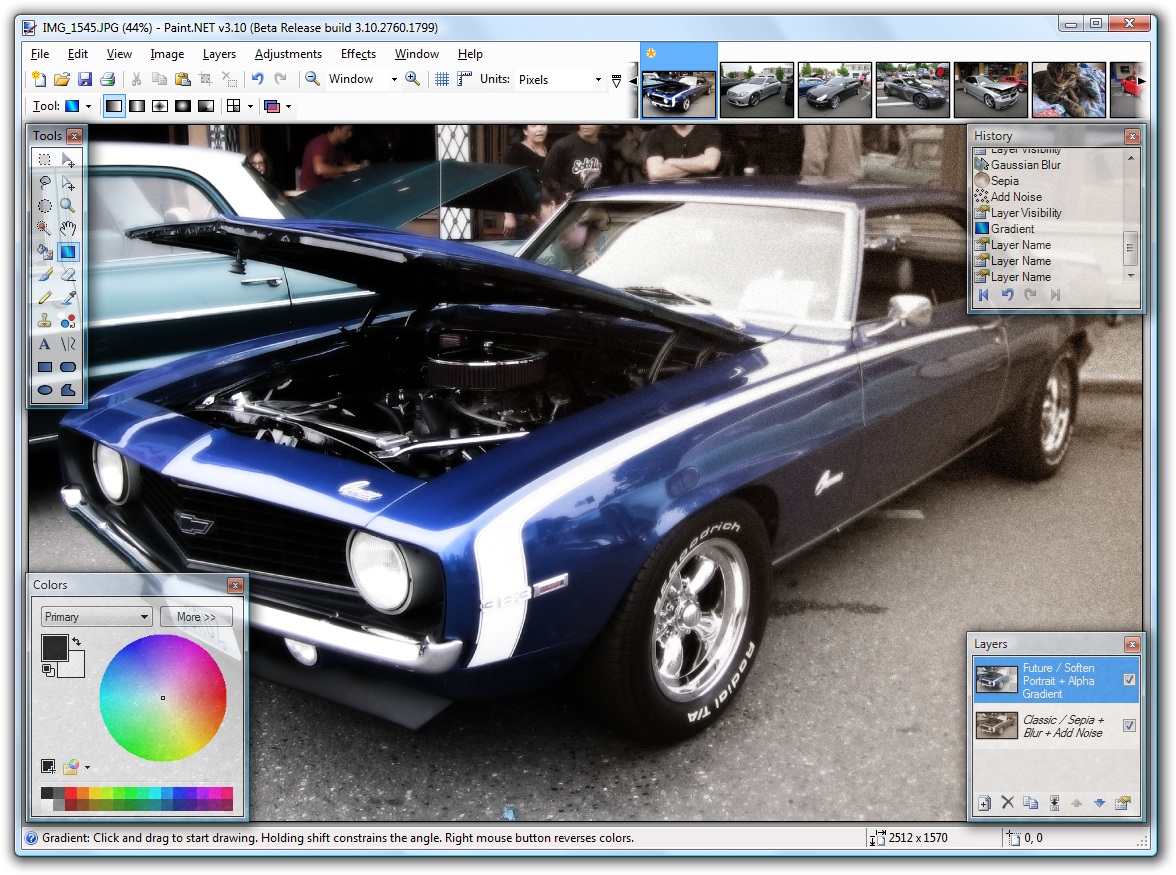
I've been using a great free image and photo editing program for more than a year called Paint.Net. I like it better than my version of Corel Photo Paint. The downside is it only runs on Windows. 
So if you want to broaden your image/photo editing options without paying a hefty price, give one of these a try.
If you've used any free or open source paint programs, please share your feedback by posting a comment below.
Thanks for Visting


Subscribe To My Blog


 Posts
All Comments
Posts
All Comments